The Complete Guide to Choosing the Right Thread and Stitch for Custom Embroidery
Ever ordered custom embroidery that looked amazing on day one and started fraying by week three? That’s rarely bad luck. Most of the time, it comes down to the wrong thread or the wrong stitch being used in the first place.
Thread and stitch selection isn’t a small detail you leave to whoever’s running the machine. It’s the actual difference between embroidery that holds up for years and embroidery that falls apart the first time it hits the wash. Good garment embroidery services get this right before a single stitch gets sewn, and here’s everything that goes into that decision.
Why Thread and Stitch Choice Matters in Custom Embroidery
People assume embroidery quality comes down to the design itself. It doesn’t, not entirely. The thread and stitch behind that design decide whether it lasts.
Pick the wrong thread and you get fraying after a handful of washes. Pick the wrong stitch density for the fabric and you get puckering, that annoying rippled look where the fabric bunches up around the stitching. Colors bleed. Edges get fuzzy instead of crisp.
None of this gets fixed after the fact. These decisions need to happen before digitizing even starts, not patched up once something’s already gone wrong on the machine.
Understanding Embroidery Thread Types
- Polyester thread is the workhorse. It holds color well, resists fading, and survives repeated washing without breaking down. This is why you’ll see it constantly on uniforms and workwear, anything that’s getting washed weekly needs thread that can take that abuse.
- Rayon thread brings the shine. It’s got a natural sheen that polyester just doesn’t replicate, which makes it the go-to for fashion pieces and decorative designs where visual impact matters more than industrial durability.
- Cotton thread gives you a matte, natural finish. It doesn’t have the sheen of rayon or the toughness of polyester, but for vintage-style or heritage designs, that flat, understated look is exactly the point.
Thread Color and Colorfastness
If a brand’s sending you their exact corporate color, matching it precisely matters more than people expect. Most embroidery shops work off thread color systems that convert Pantone or brand color codes into specific thread shades, so the stitched logo actually matches the print version instead of just looking close.
Colorfastness matters just as much. Cheap thread can bleed or fade fast, especially through repeated washing, and that’s usually tied straight back to thread type. Polyester holds color the longest. Cotton and rayon fade faster under heavy wash cycles.
What Is Thread Weight and Why Does It Matter?
Thread weight gets measured by number, 40wt is standard for most embroidery, 60wt is finer. Here’s the part that trips people up: lower numbers mean thicker thread, not thinner.
Heavier thread gives you bold coverage and works well for larger designs. Finer thread lets you capture small text and intricate detail that thicker thread would just blur together. Get this wrong and small logo text turns into an unreadable blob.
Metallic thread adds sparkle for decorative work, but it comes with real tradeoffs. It’s rougher on your machine’s tension settings and wears down needles faster than standard thread.
Thread and Stitch Comparison at a Glance
| Thread Type | Best Fabric | Durability | Finish | Common Use |
| Polyester | Uniforms, workwear, high-wash items | High | Slight Sheen | Corporate wear, Workwear |
| Rayon | Fashion pieces, decorative apparel | Moderate | High Sheen | Fashion Decorative Designs |
| Cotton | Vintage or Heritage Garments | Moderate | Matte | Retro-style Branding |
| Metallic | Decorative accents | Low to Moderate | Reflective | Special occasion, decorative logos |
Common Embroidery Stitch Types Explained
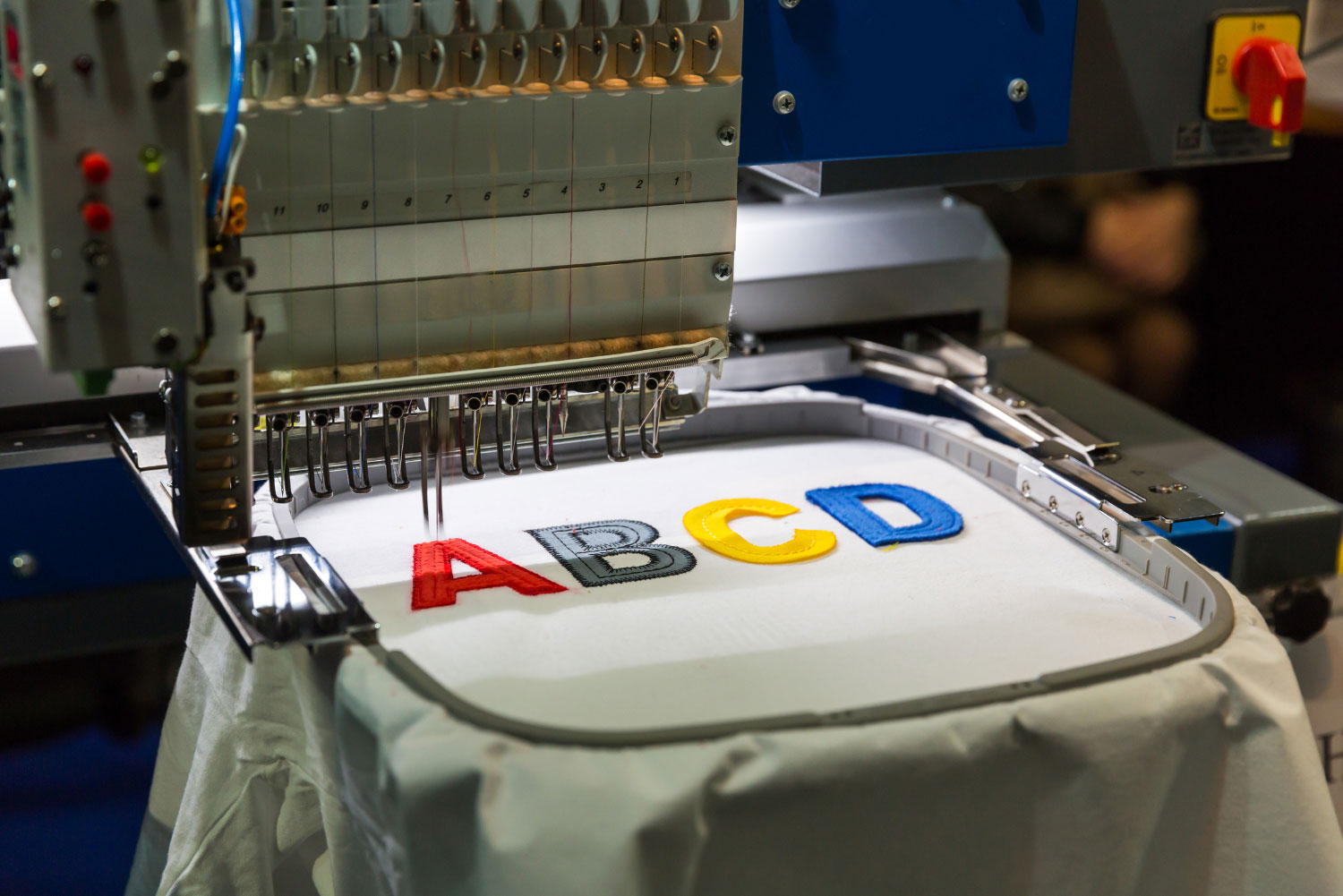
- Satin stitch is your go-to for borders, text, and clean edges. It’s fast, sharp, and gives that crisp finished look on smaller elements.
- Fill stitch, sometimes called tatami, covers large areas with solid, even coverage. Anything with a big block of color usually gets stitched this way.
- Running stitch handles fine detail and outlines the thin lines you need without bulking up the fabric.
- Chain stitch brings texture and a decorative edge, less common for everyday logos but great when a design calls for something with more visual depth.
The Role of Needle Size and Type
Thread and stitch get all the attention, but the needle matters just as much. Wrong needle size and even the right thread starts breaking mid-run.
Needle point type matters too. Sharp needles work best on woven fabrics, while ballpoint needles are built for knits, since they push through fibers instead of piercing them and causing runs. Get this mismatch wrong and you’ll see skipped stitches and thread snapping constantly during production.
-
Bobbin Thread: The Half of the Equation Everyone Forgets
Everyone talks about the top thread. Almost nobody talks about the bobbin thread underneath, and that’s a mistake, because it affects the finished piece just as much.
Wrong bobbin tension and you’ll see the bobbin thread peeking through on the front of the design, a small but obvious defect that ruins an otherwise clean piece. Matching bobbin thread quality to your top thread keeps tension balanced and the final stitch consistent front to back.
-
Stabilizers and Backing: Why They Affect Stitch Quality
Stabilizer sits underneath the fabric during stitching, and it does more heavy lifting than most people realize.
Permanent stabilizer is always attached and is best used for fabrics which require constant support. Tear-away stabilizer is detached after sewing and is appropriate for fabrics which do not stretch. Dissolvable stabilizer becomes dissolved in water and is recommended for use on sensitive fabrics.
Skip the right stabilizer and even perfect thread and stitch choices won’t save the final result. Lightweight or stretchy fabric without proper backing just puckers and distorts under the stitching.
-
Matching Thread and Stitch to Fabric Type
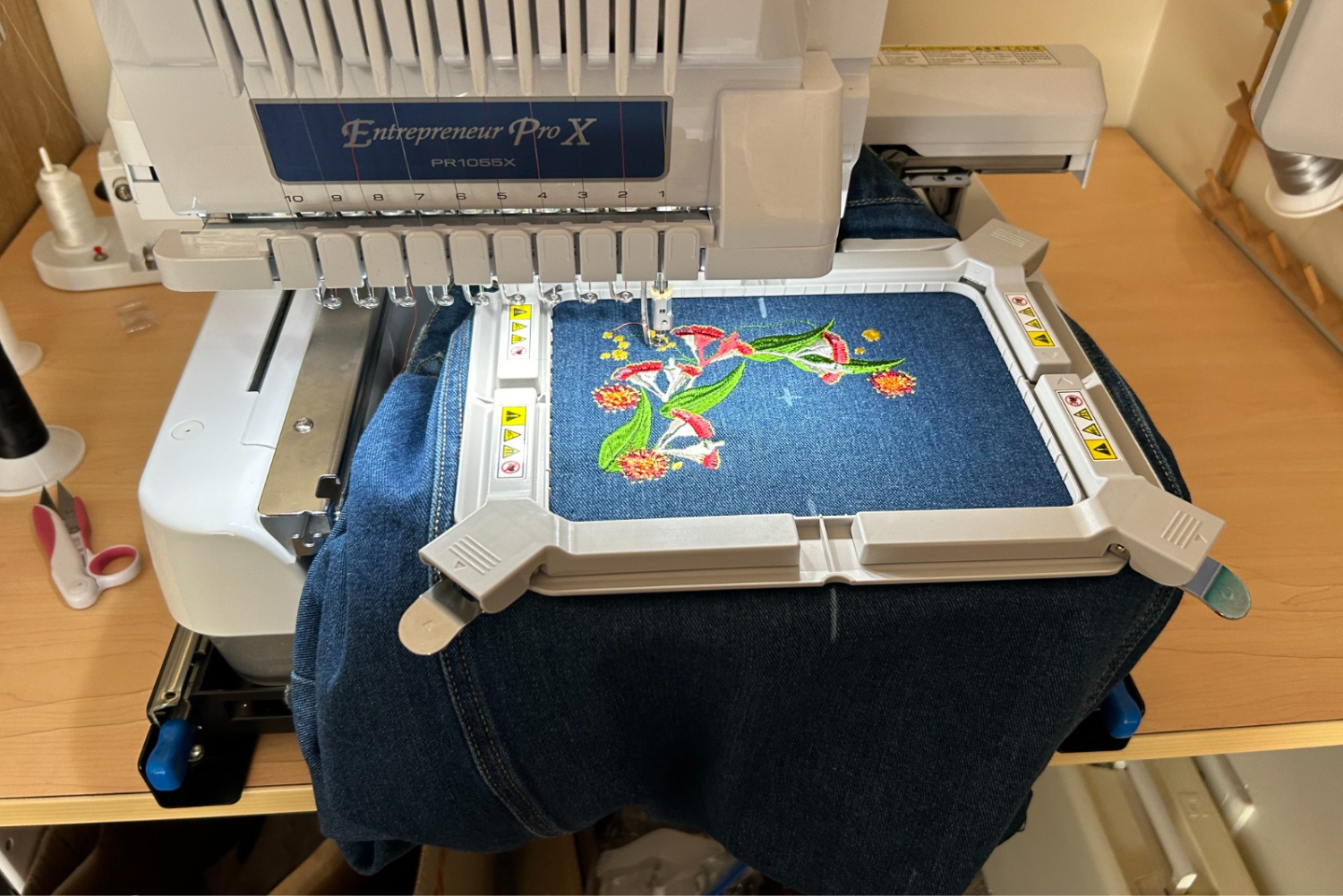
Cotton and canvas handle most thread types well, they’re stable enough to take heavier stitch density without much fuss. Polyester and performance wear need thread that can flex with the fabric’s stretch. Denim and heavier fabrics can handle bolder stitch density and thicker thread without a problem. Lighter threads, fine needles, and careful stabilizer selection are needed when sewing delicate materials such as silk or knits.
How Custom Embroidery Digitizing Ties Into Thread and Stitch Choice
Digitizing happens before a single stitch gets sewn, and it’s where stitch density, direction, and thread paths all get programmed into the design.
The exact same artwork can look completely different depending on how it’s digitized. Wrong stitch density for the thread weight you’re using and the design either looks too thin and gappy or too dense and stiff. This is why digitizing and thread selection need to happen together, not as separate decisions made by different people.
Thread and Stitch Considerations for Uniforms and Workwear
Uniforms take a beating, washed weekly, sometimes daily, for months or years straight. This is where polyester thread earns its reputation, it just holds up better than anything else under that kind of repeated stress.
Stitch density matters here too. Workwear needs stitching sturdy enough to survive industrial washing without the design breaking down, which usually means denser fill stitches over anything decorative or delicate.
Bulk Orders vs One-Off Custom Pieces
Bulk uniform orders almost always standardize on one thread type across the whole run. It keeps costs predictable and guarantees every single piece looks and performs identically, no variation between batch one and batch fifty.
One-off custom pieces work differently. You have more leeway with regard to thread type, thread color, and stitch pattern because you are not concerned with replicating the same thing hundreds of times over. Of course, production lines are more efficient and cost-effective on a per-piece basis than individual projects, which are more costly and take longer to produce.
Thread and Stitch Considerations for Custom Logo Embroidery
Logos are unforgiving. Small text and fine detail need precise thread weight, usually on the finer end, so letters stay readable instead of blurring into each other.
The most common mistake brands make here is treating logo digitizing like any other design. Small text needs its own stitch settings entirely, and skipping that step is exactly how you end up with a logo that looks sharp on screen and muddy on the actual garment.
How Much Does Thread and Stitch Choice Affect Embroidery Cost?
Thread type alone shifts cost, metallic and specialty threads run higher than standard polyester. Stitch density adds up too, denser fill stitches take longer to sew, and machine time is a real cost driver.
Here’s the thing worth remembering: cheaper thread up front often means replacing garments sooner because the embroidery didn’t hold up. What looks like savings on one order can end up costing more across the life of the product.
Sustainable and Eco-Friendly Thread Options
Demand for eco-conscious apparel keeps growing, and thread is no exception. Recycled polyester thread performs almost identically to standard polyester while cutting down on virgin plastic use. Organic cotton thread appeals to brands wanting a fully natural fiber story behind their embroidery, matte finish included.
Neither of these two options gives up much when it comes to performance, and so their inclusion by brands that are moving toward sustainable marketing messages is straightforward.
Common Mistakes to Avoid When Choosing Thread and Stitch
- Use of heavy thread when very light thread is needed for detail work
- Failure to consider the real interaction of thread and fabric
- Neglecting to consider washing and care needs when selecting thread
- Selection of stitch based solely on appearance rather than strength
- Use of mismatched bobbin and top threads, resulting in visible flaws in the final product
Why Does Thread Break During Embroidery?
Thread breaking mid-run isn’t random, it almost always traces back to one of a few causes. Wrong tension settings, the wrong needle for the fabric, low-quality thread, or a stabilizer that doesn’t match the fabric weight.
You might not be the one running the machine, but this matters to you anyway. It’s exactly why production delays happen, and why the finished piece sometimes doesn’t match what you approved in the sample.
Final Thoughts
Great embroidery isn’t just about a good design. It’s the thread, the stitch, the needle, and the stabilizer all working together, and getting any one of those wrong undoes the rest.
At 10 Thread Embroidery, that’s exactly what our garment embroidery services pay attention to on every single order, matching thread, stitch, needle, and backing to your fabric and your project so the finished piece actually holds up. If you’re planning your next custom run, let’s make sure it’s built to last.